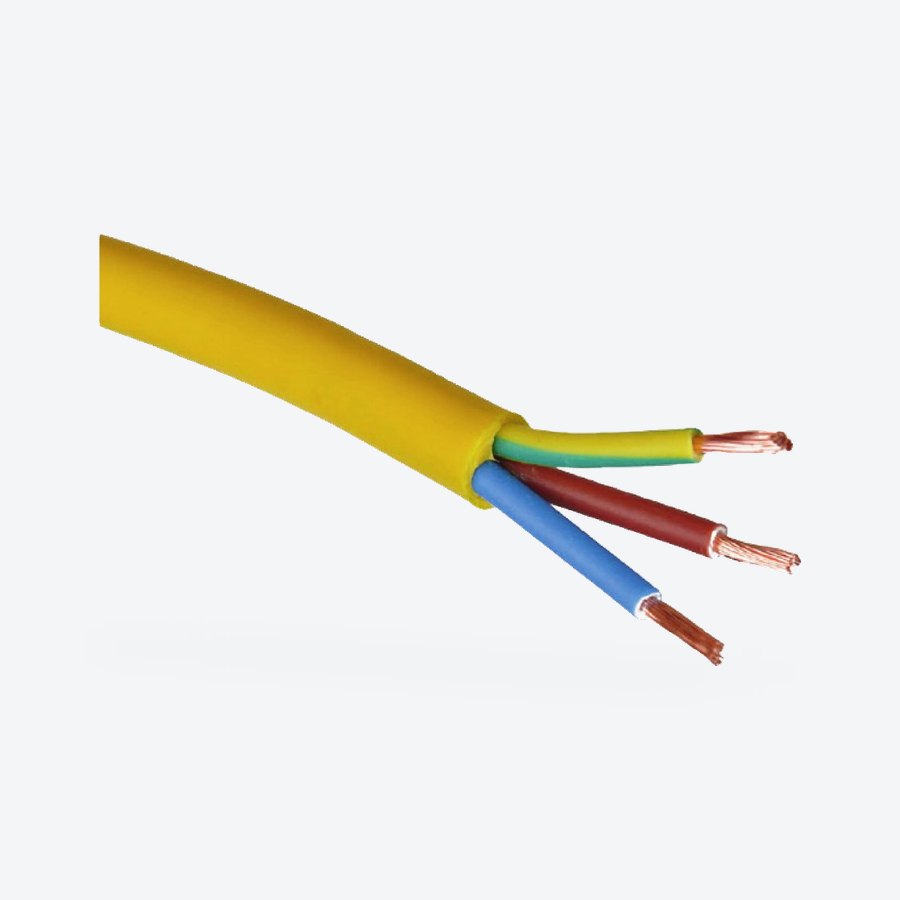

Why does one Arctic Cable cost more than another?
Real arctic grade flexible cable uses insulation and sheath compounds made to stay flexible far below freezing, and full-size copper conductors. Cheaper cable can be ordinary PVC flex (H05VV-F) coloured yellow or blue, which is meant for indoor use and can crack in the cold, or have conductors that don't meet their stated size. Check the cable is printed with the standard (BS 6004) and an arctic code such as 3183YA, and buy from a supplier who will stand behind it.
What makes Arctic Cable arctic
Arctic grade flex is made with PVC compounds that stay flexible in sub-zero conditions, so it can be coiled, uncoiled and dragged across a frozen site without cracking. Ordinary duty flex (H05VV-F) is designed for indoor use and isn't intended for that.
Where cheap cable cuts corners
- Ordinary flex in the wrong colour. Industry testing has found ordinary PVC flex dyed yellow and sold as arctic. In cold bend tests it split and cracked, exposing live conductors.
- Thin conductors. Less copper than the stated size means higher resistance, more voltage drop and more heat. On a 110V site, where the current is twice that at 230V, that matters even more: see the cable size calculator.
- Poor sheathing. Insulation and sheath that break down in the cold or under abrasion.
How to check a drum
- Read the print on the sheath: it should name the standard (BS 6004) and the cable type, such as 3183YA for 3 core.
- Be wary of cable marked H05VV-F being sold as arctic.
- Bend a sample in the cold: Arctic Cable stays supple; ordinary flex goes stiff.
- Buy from a supplier who can tell you where it came from and will stand behind it. Suspect cable can be reported to the Approved Cables Initiative for testing.
What we stock
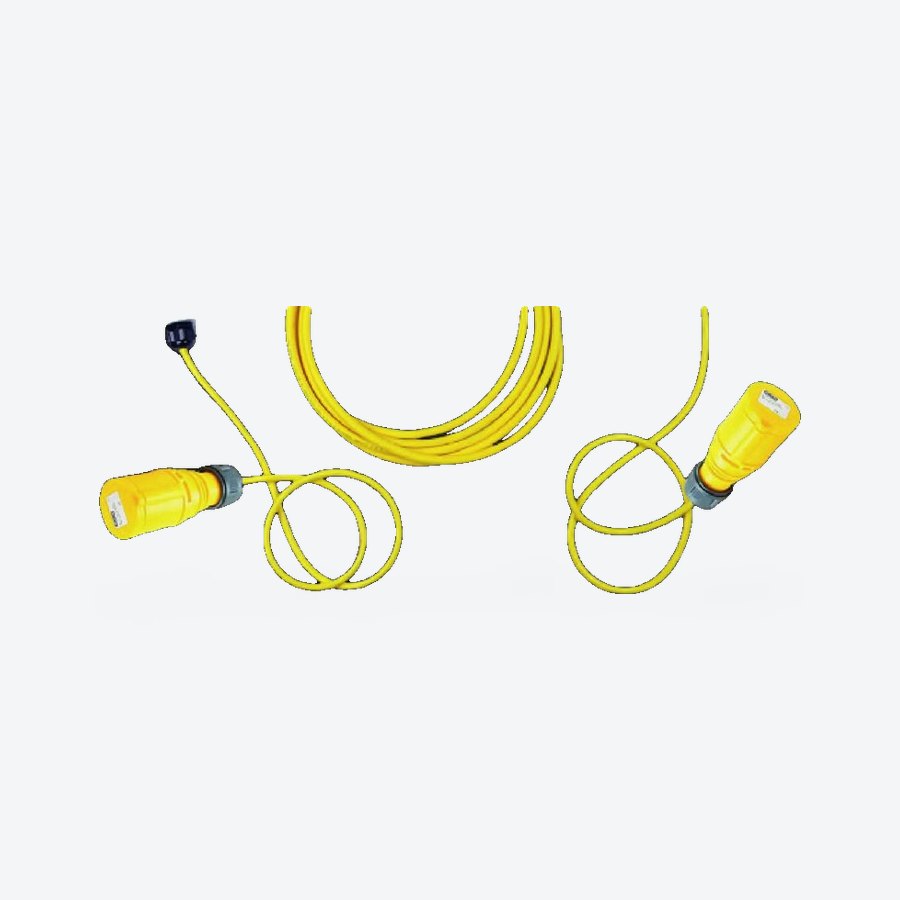
Arctic grade flexible cable in 1.5mm², 2.5mm² and 4mm², 3 core in blue and yellow, and 4 core 1.5mm² in yellow, with one of the largest wholesale stocks of 1.5mm² 3 core in the UK. It's the same cable we use to build Powerdrop and to pre-wire our 2ft Site Fittings.