
What size cable do I need? 110V cable size and voltage drop calculator
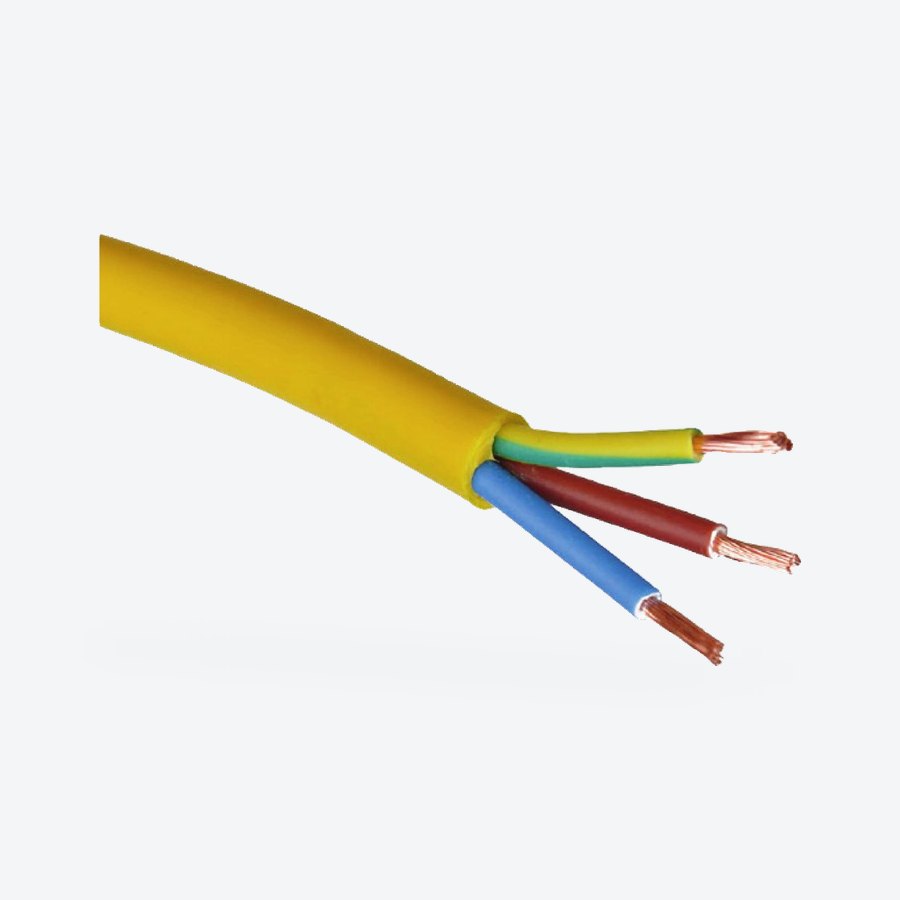
Pick the smallest cable that does two things: carries the current (watts divided by volts) within its rating, and keeps the voltage drop within the limit, usually 5% for power and 3% for lighting. At 110V the current is about twice what it is at 230V, so long site leads often need a bigger cable than you'd expect. Arctic flexible cable is rated 16A at 1.5mm², 25A at 2.5mm² and 32A at 4mm².
Cable size calculator
Turn on JavaScript to use the calculator, or use the table and formula below.
How it works
- Current: amps = watts ÷ volts. 1,500W at 110V is about 13.6A; at 230V it's about 6.5A.
- Current rating: the cable must be rated for at least that current.
- Voltage drop: volts lost = mV/A/m × amps × metres ÷ 1,000. Keep it within 5% for power (5.5V at 110V) or 3% for lighting (3.3V at 110V).
Arctic flexible cable ratings
| Size | Current rating | Voltage drop |
|---|---|---|
| 1.5mm² | 16A | 32 mV/A/m |
| 2.5mm² | 25A | 19 mV/A/m |
| 4mm² | 32A | 12 mV/A/m |
Single-phase, PVC flexible cable, from BS 7671 Appendix 4 (Tables 4F3A and 4F3B), up to 30°C ambient.
Worked example
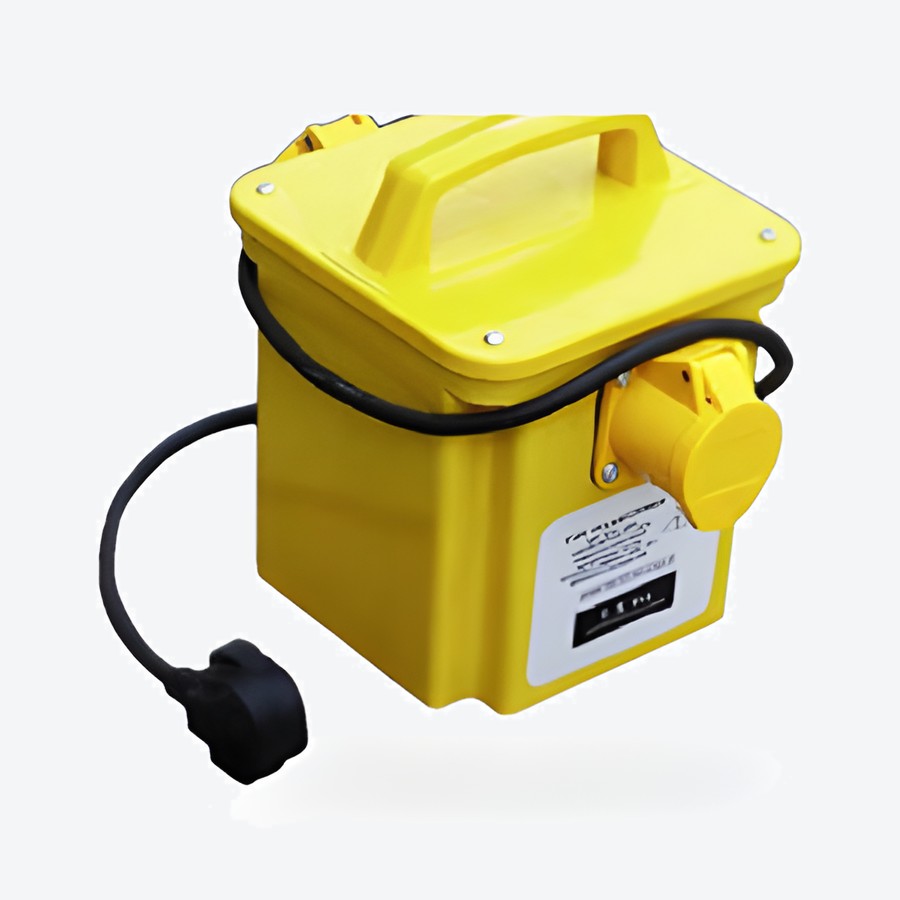
A 1,500W load on a 25m lead from a 110V transformer draws about 13.6A.
- 1.5mm²: 32 × 13.6 × 25 ÷ 1,000 = 10.9V (9.9%). Too much drop.
- 2.5mm²: 19 × 13.6 × 25 ÷ 1,000 = 6.5V (5.9%). Still over 5%.
- 4mm²: 12 × 13.6 × 25 ÷ 1,000 = 4.1V (3.7%). Within the limit.
The same load at 230V on 1.5mm² drops only about 5.2V (2.3%). That's why 110V leads are usually a size bigger.
Before you rely on it
- Unwind cable drums fully: coiled cable gets hot and its rating drops.
- The voltage drop limit applies from the origin of the installation, so leave room for the transformer and any other cables in the run.
- This is a guide for choosing kit, not a design. The site's electrical design and the electrician's calculations always take priority.