
18th Edition wiring regulations: what's changed, up to Amendment 4:2026
The 18th Edition of the IET Wiring Regulations, BS 7671:2018, is still the current edition. Its latest version is BS 7671:2018+A4:2026, published on 15 April 2026; it became the only current version on 15 October 2026, when the A2:2022 and A3:2024 version was withdrawn. The big changes since 2018: RCD protection for socket-outlets up to 32A, RCDs on domestic lighting circuits, arc fault detection devices, revised surge protection, fire-resistant cable supports, and, in A4, new rules for batteries, Power over Ethernet and functional earthing.
This is our plain summary of what's changed, not the regulations themselves. Always design and test to the current BS 7671, and check the regulation text before relying on any point here.
1. It's still the 18th Edition
BS 7671:2018 was issued on 2 July 2018 and came into effect on 1 January 2019. Since then it has been amended four times:
| Version | Issued | Main change |
|---|---|---|
| BS 7671:2018 | July 2018 | The 18th Edition |
| Amendment 1 | February 2020 | Electric vehicle charging |
| Amendment 2 | March 2022 | Revised requirements, including for socket-outlets |
| Amendment 3 | July 2024 | Bidirectional and unidirectional protective devices |
| Amendment 4 | 15 April 2026 | Batteries, Power over Ethernet, functional earthing, medical locations, new forms |
BS 7671:2018+A4:2026 has been the only current version since 15 October 2026. Work designed before that date can be completed to the previous version. At the time of writing, no date has been announced for a 19th Edition.
2. RCDs on socket-outlets up to 32A (Regulation 411.3.3)
Additional protection by a 30mA RCD is required for socket-outlets rated up to 32A, and for mobile equipment rated up to 32A used outdoors. For socket-outlets in locations not used by ordinary persons or children, the RCD can be left off only where a documented risk assessment, made with a skilled person, shows it isn't needed, and that assessment goes with the certificate. The IET recommends RCD protection on all socket-outlets.
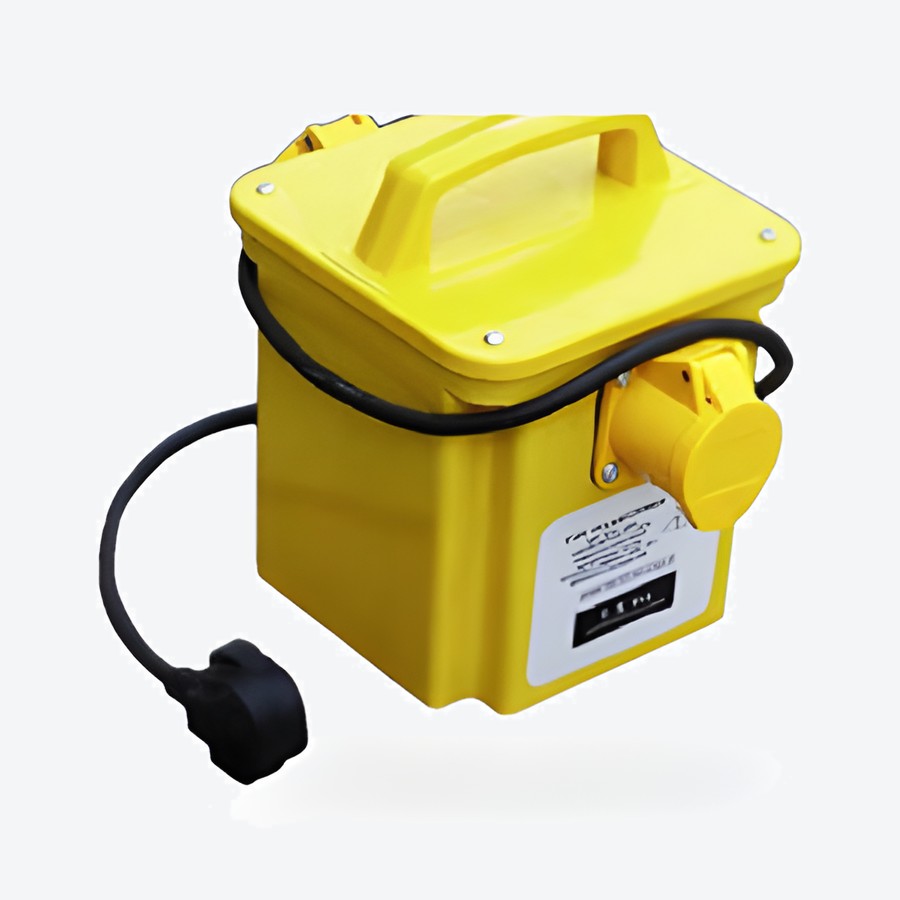
On site: Regulation 411.3.3 doesn't apply to reduced low voltage systems (Regulation 411.8), which is the 110V centre-tapped-to-earth supply used on UK construction sites. See why UK sites use 110V.
3. RCDs on lighting circuits in homes (Regulation 411.3.4)
In domestic premises, AC final circuits supplying luminaires need additional protection by a 30mA RCD.
4. Arc fault detection devices (AFDDs)
The 18th Edition introduced AFDDs to cut the risk of fire from arcing faults in final circuits (Regulation 421.1.7). As NICEIC summarises the current rules, they're required on socket-outlet circuits up to 32A in care homes, high rise residential buildings, houses in multiple occupation and purpose-built student accommodation. Amendment 4 uses the term "high rise residential buildings": over 18 metres or more than six storeys.
5. Surge protection
Section 443 was redrafted and Section 534 on surge protective devices (SPDs) was completely revised. Protection against transient overvoltage is required where the consequences could cause serious injury or loss of life, interrupt public services or commercial and industrial activity, or affect large numbers of people in one place.
6. Cable supports in a fire (Regulation 521.10.202)
Cables must be supported so they can't collapse early in a fire. This applies throughout the installation, not just on escape routes.
7. Amendment 3:2024: solar and batteries
A3 added definitions for bidirectional and unidirectional protective devices, and Regulation 530.3.201 requires the right type to be chosen. It's aimed at installations where power can flow both ways, such as solar PV and battery storage.
8. Amendment 4:2026: what's new
- A new Chapter 57 on stationary secondary batteries used for energy storage.
- A new Section 545 on functional earthing and functional bonding for IT equipment, with pink identification for functional earthing conductors.
- A new Section 716 on Power over Ethernet, covered by BS 7671 for the first time.
- Protective neutral bonding (PNB) earthing included for the first time.
- A major revision of Section 710, medical locations.
- Updated model forms. On an EICR, only C1 and C2 codes now make the report unsatisfactory; C3 and FI (further investigation) don't.
What it means for Site Temps and events
- Construction sites are covered by Section 704. Reduced low voltage (110V, no more than 55V to earth single-phase or 63.5V three-phase) is strongly preferred for portable hand lamps, hand tools and local lighting up to 2kW, and plugs, sockets and couplers from 16A to 125A should meet BS EN 60309-2. The published summaries of Amendment 4 that we've read don't list changes to Section 704.
- Events and shows are covered by Sections 711 and 740, with BS 7909 as the code of practice for temporary power at events. See event power voltages and connectors.
- For 230V socket circuits on site cabins and welfare units, the RCD rules in point 2 apply. Our RCD Welding Sockets and 110V in-line RCDs add RCD protection at the point of use.
Sources
- BSI, BS 7671:2018 summary of major changes.
- IET Wiring Matters, issue 91 (July 2022), Mythbusters 8: socket-outlets and 30mA RCDs.
- IET, BS 7671:2018 Amendment 3:2024.
- NICEIC, Amendment 4 to BS 7671 (FAQ, 2026).
- NICEIC, Requirements for the use of reduced low voltage systems on construction sites (2023).