
Why do UK building sites use 110V?
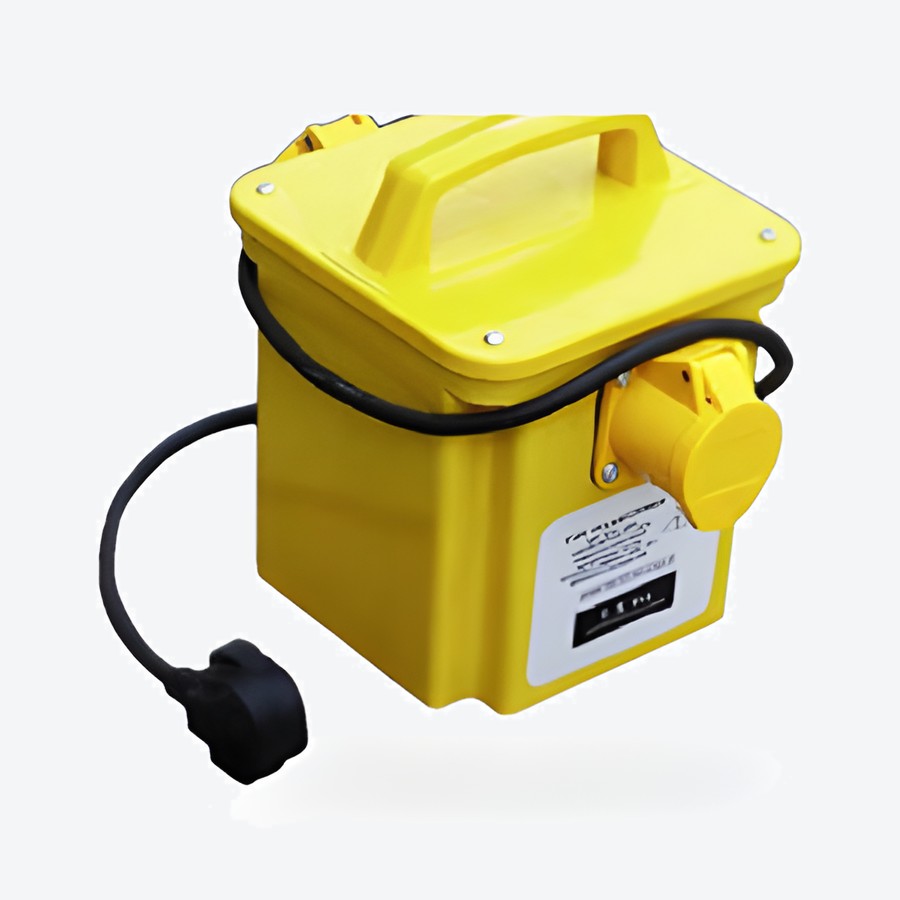
UK sites use 110V because it limits the shock a worker can get. Site transformers give 110V centre-tapped to earth (CTE), so neither live conductor is more than 55V from earth (63.5V on three-phase). This reduced low voltage system is the standard way to power portable tools and site lighting on UK construction sites, as set out in BS 7375, the code of practice for electricity on construction sites.
What 110V CTE means
The transformer's secondary winding is earthed at its midpoint. You still get 110V between the two live conductors to run tools and lights, but someone who touches one live conductor and earth is exposed to only 55V. Single-phase 110V has no neutral: both live cores are brown, and polarity doesn't matter.
Why it's safer
Sites are wet, cables get damaged and tools take a beating. Cutting the touch voltage from 230V to 55V greatly reduces the risk of a fatal shock. Reduced low voltage circuits are also protected by overcurrent devices in each line conductor.
What it covers
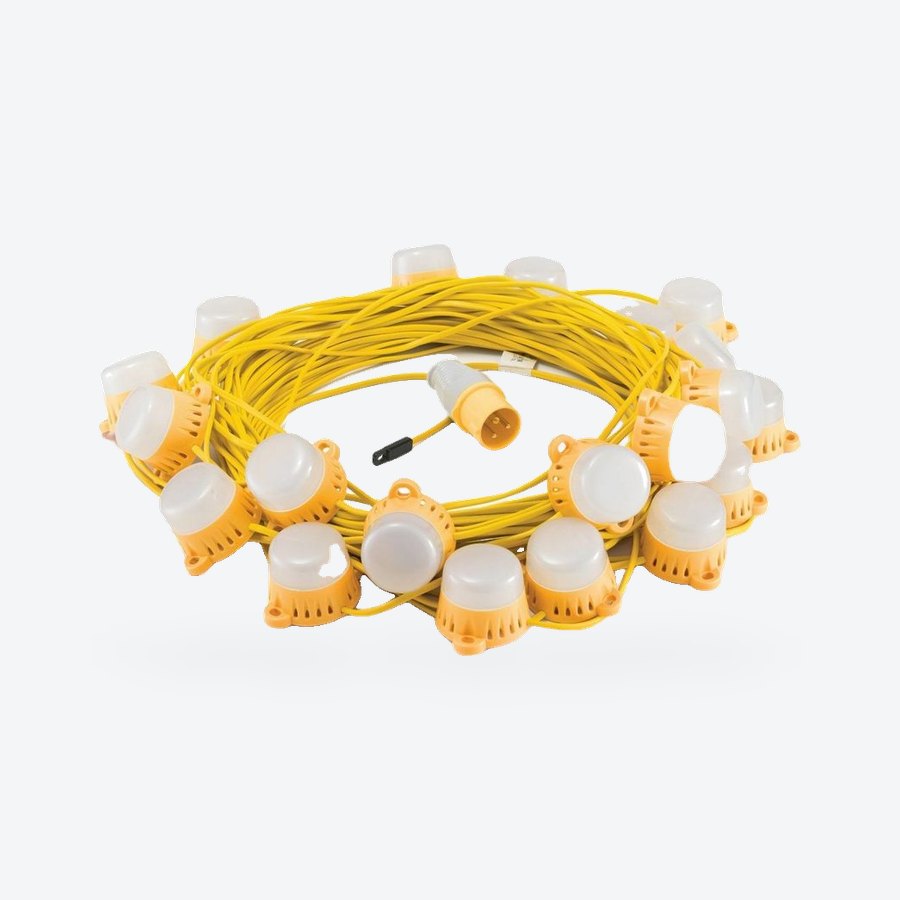
Portable and hand-held tools, site lighting and hand lamps. Fixed floodlighting, site offices and fixed plant often run at 230V or 400V from the site distribution.
How you recognise it
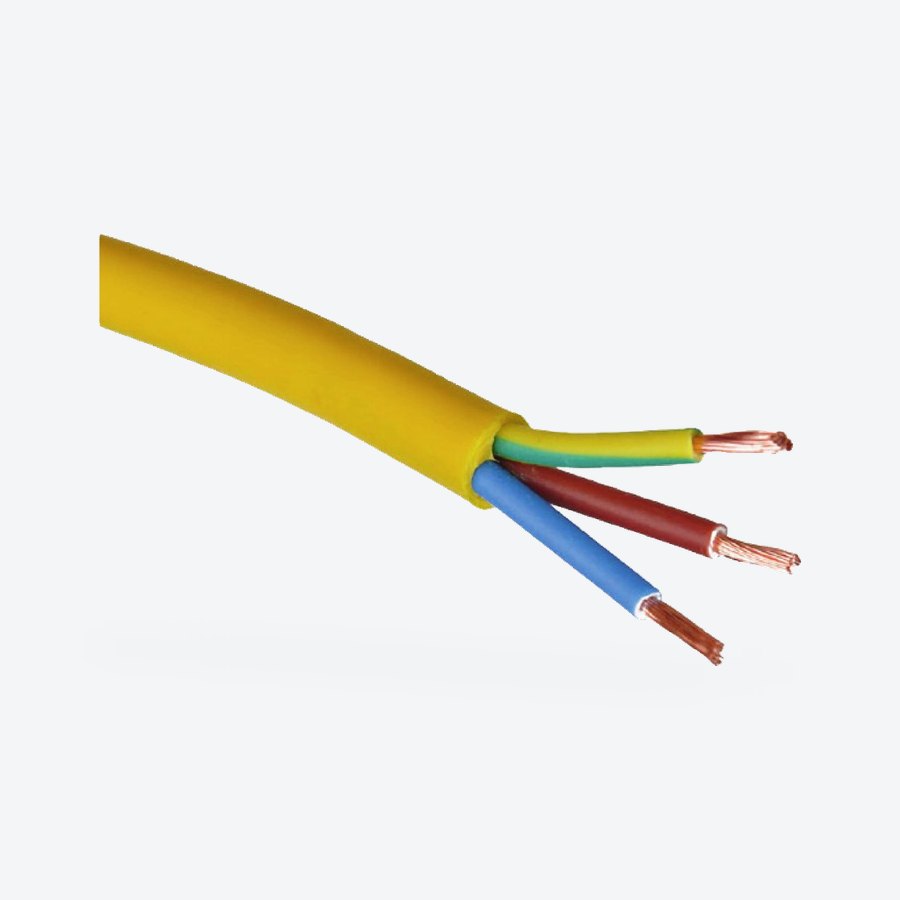
Yellow 110V plugs and sockets (BS EN 60309), yellow arctic cable and yellow site transformers.
Standards, for reference
- BS 7375:2010, Distribution of electricity on construction and demolition sites. Code of practice.
- BS 7671, Regulation 411.8 (reduced low voltage systems) and Section 704 (construction and demolition site installations).