
Toolbox talk · Electrical · about 5 minutes
Site Transformers: safe use
Download the PDF with attendance sheet
Why it matters
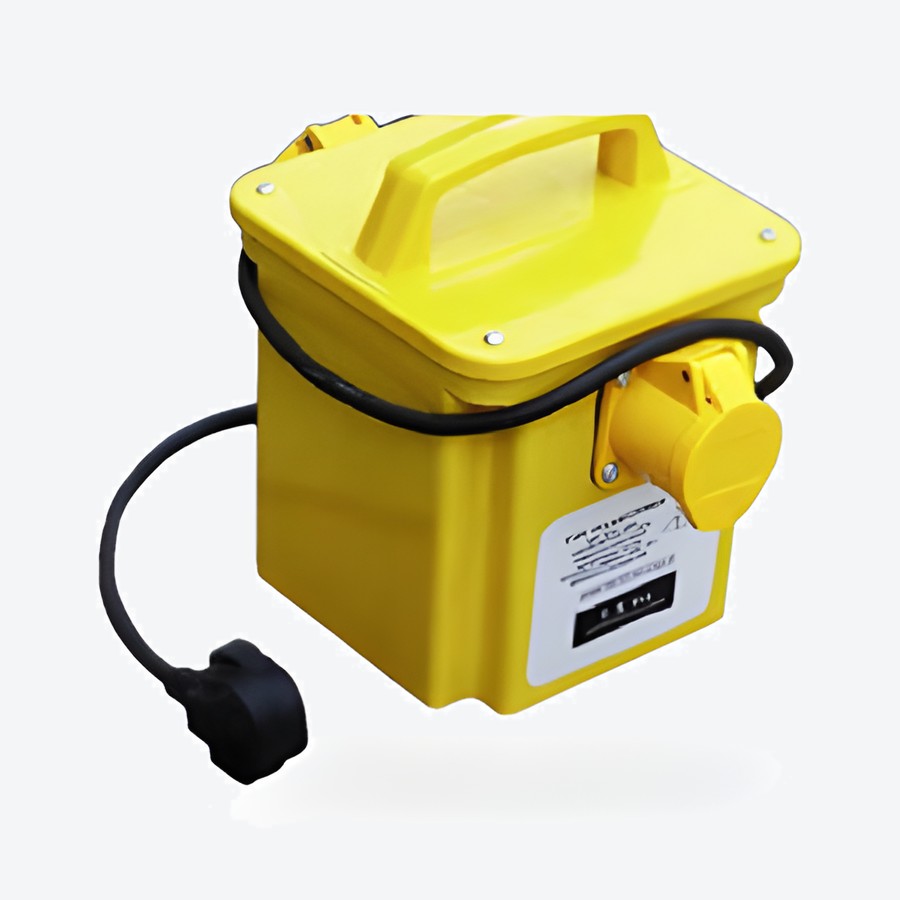
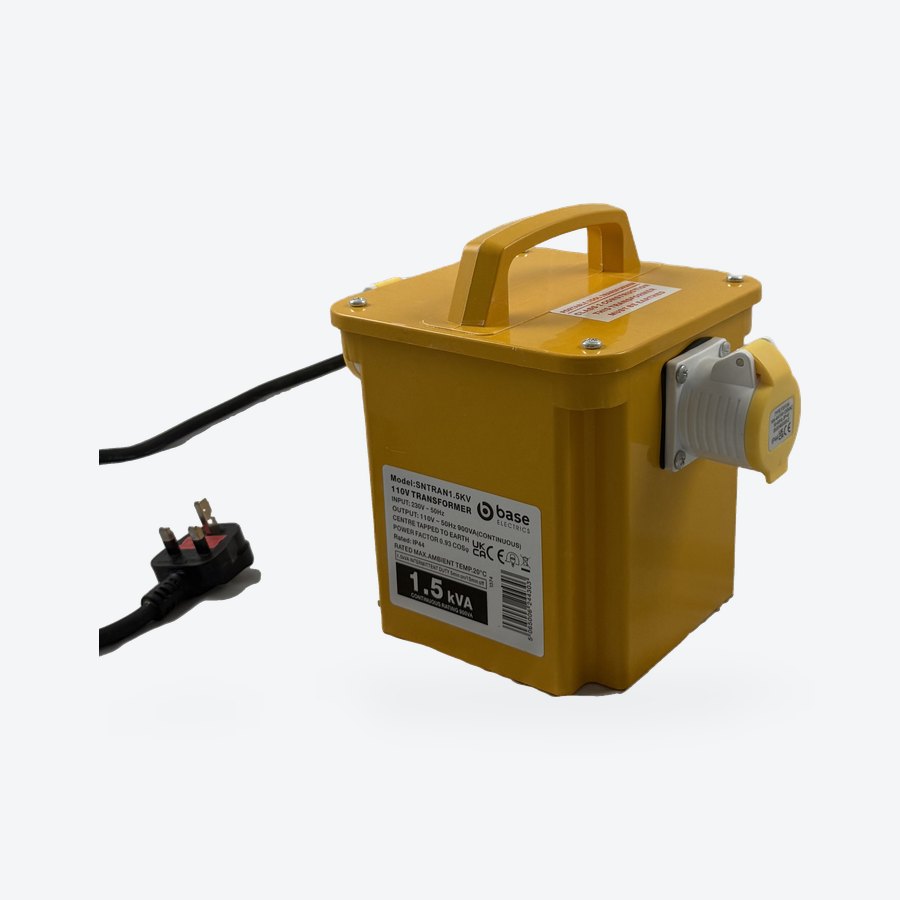
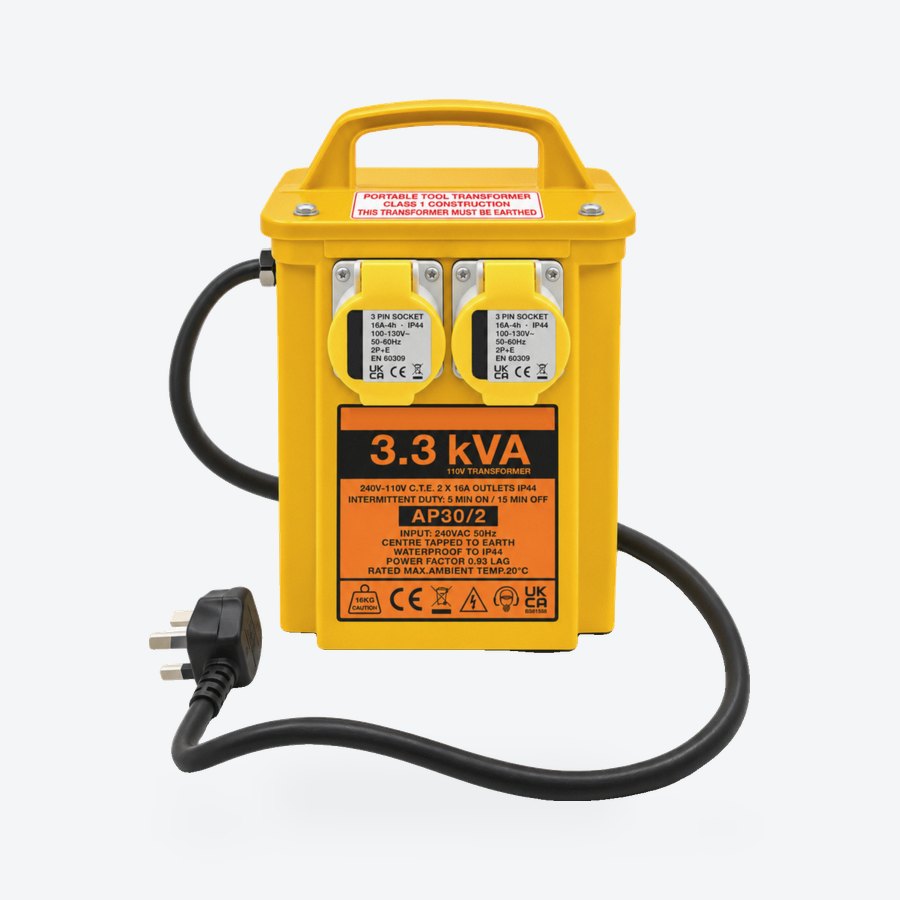
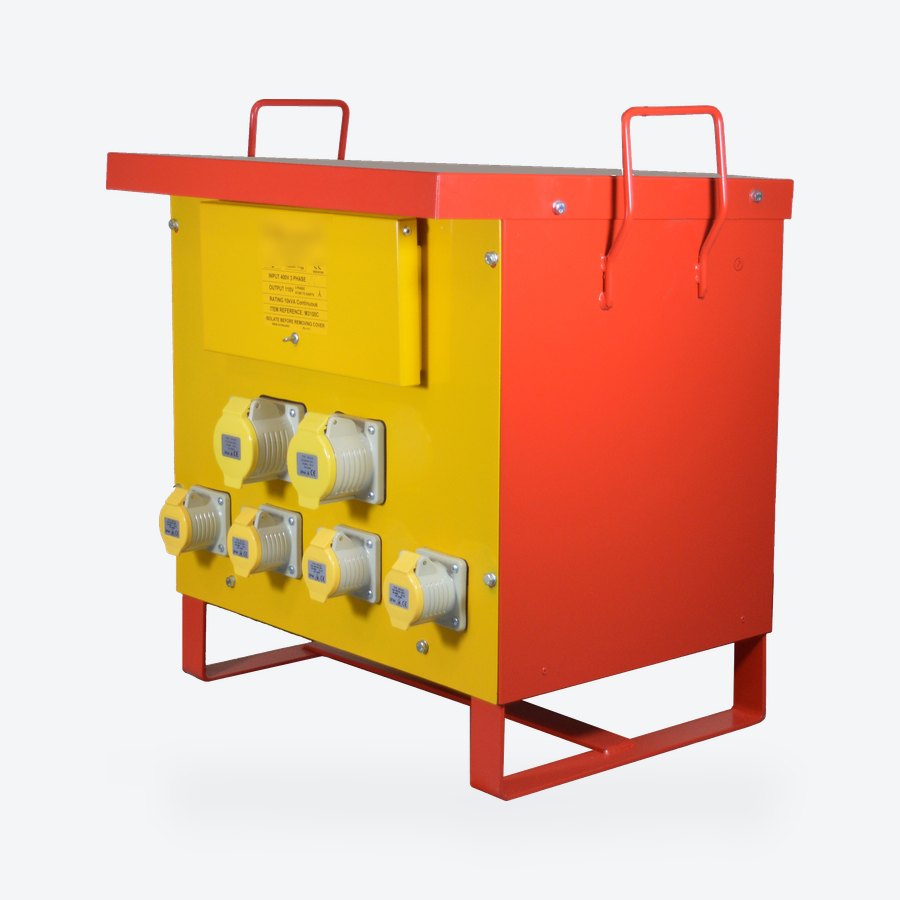
Site Transformers turn mains power into 110V centre-tapped to earth, so a fault or a cut cable exposes you to 55V at most. That protection only works if the transformer is the right size, in good condition and used properly.
The hazards
- Overloading a transformer with too many tools or lights
- Damaged casings, leads or sockets
- Transformers left in water or puddles
- Plugging 230V equipment into the supply side
- Trip hazards from trailing leads
Stay safe
- Check the transformer and its lead for damage before use
- Know its rating in kVA and don't overload it: add up what's plugged in
- Keep it dry, upright and off wet ground
- Only plug 110V yellow equipment into the yellow outlets
- Route leads where they won't be run over or tripped on
- Switch off and unplug before moving it
- Report a transformer that runs hot, smells or keeps cutting out
Ask the team
- What size is the transformer you're using, and what's plugged into it?
- Why is 110V CTE safer than 230V on site?
- What do you do if a transformer cuts out?
The law and guidance
Electricity at Work Regulations 1989. BS 7375, Distribution of electricity on construction and demolition sites. HSE HSG141.
General guidance to help you give a toolbox talk. It doesn't replace your site's risk assessments, method statements, permits or training. Check it against your own site rules before you give it.